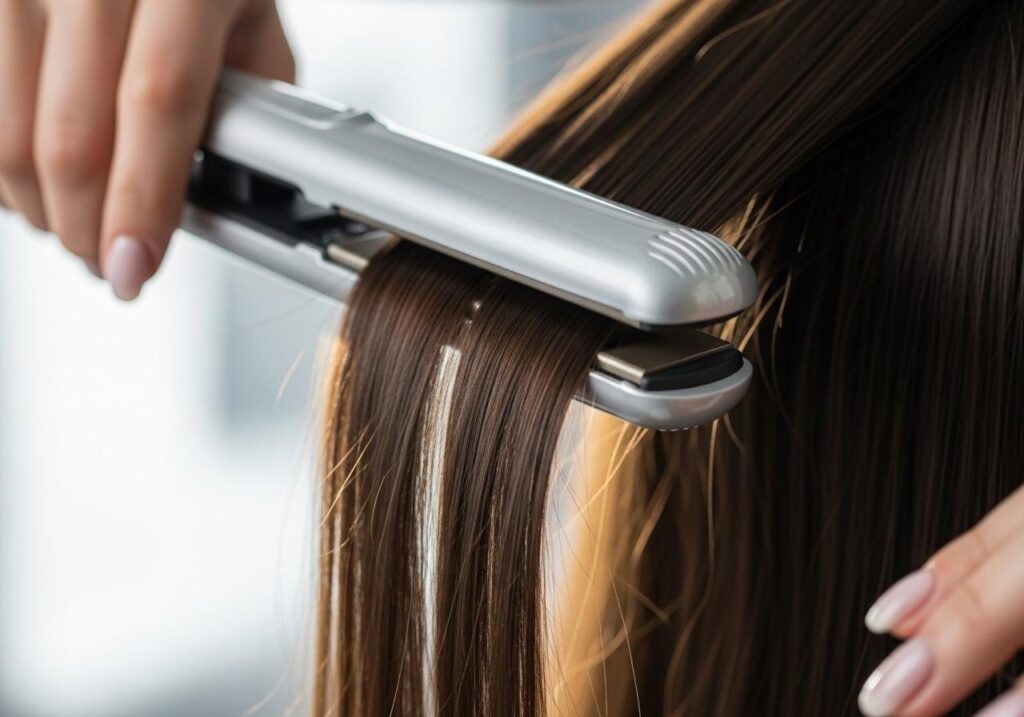

Whether you’re reaching for a hair straightener to create sleek, polished locks or grabbing your curling iron for those perfect bouncy waves, learning how to minimize heat damage is absolutely essential for keeping your hair healthy. The secret isn’t to swear off heat styling entirely—it’s about understanding the science behind safe application and mastering the right techniques.
With the proper knowledge and a bit of preparation, you can achieve stunning results while keeping your hair’s natural strength and shine intact.
Understanding Heat Damage at the Cellular Level
When you apply excessive heat to your hair, you’re essentially weakening the protein structure within each strand. Think of your hair as having natural oils and moisture that work like tiny bodyguards, protecting against damage. But when temperatures climb beyond what your hair can handle—its damage threshold—these protective barriers start breaking down.
What happens next is fascinating, albeit destructive. The proteins in your hair begin to denature, much like how an egg white transforms when you cook it. This creates permanent structural changes that show up as brittleness, dullness, and those frustrating breaks we all dread.
Here’s what makes this particularly tricky: every hair type has a different tolerance level. Fine or chemically treated hair can only handle so much before it rebels, while thick, healthy strands are naturally more resilient. Wet or damp hair faces an even greater risk because water conducts heat incredibly efficiently. When moisture inside your hair shaft heats up rapidly, it expands and can create microscopic fractures—damage you might not notice until it’s too late.
Pre-Styling Preparation: The Foundation of Protection
The most important step in preventing heat damage happens long before you switch on any styling tool. Never, ever apply heat to damp hair—this single rule can save you from significant damage.
Thermal protectants serve as your hair’s first line of defense, creating a crucial barrier between your strands and the heat source. These products typically contain silicones, oils, or proteins that help distribute heat more evenly across your hair. Apply your protectant from mid-length down to the ends, steering clear of your roots to avoid that greasy look nobody wants. Give the product time to dry completely before you start styling.
Take a moment to honestly assess your hair’s current condition too. If it’s feeling dry or brittle, it’s worth incorporating some deep conditioning treatments into your routine and scaling back on heat styling until things improve.
Temperature Management and Proper Technique
Here’s a common myth that needs busting: cranking up the heat doesn’t give you better results. In fact, using the lowest effective temperature for your specific hair type will give you the best outcome with the least damage:
- Fine or damaged hair: 150–180°C (300–355°F)
- Medium hair: 180–200°C (355–390°F)
- Thick or coarse hair: 200–210°C (390–410°F)
Investing in quality tools with adjustable temperature settings and ceramic or tourmaline plates makes a real difference. These materials ensure even heat distribution, eliminating those dangerous hot spots that can cause localized damage.
Technique matters just as much as temperature. Work in manageable sections to avoid the temptation of running your tool over the same strand multiple times. Move with purpose—slow and deliberate beats rushed every time. Rushing only leads to repeated passes and increased damage. Apply gentle, consistent pressure without clamping down like you’re trying to crush something, and always glide from roots to tips in smooth, uninterrupted motions.
Safety Considerations and Long-Term Health
Personal safety should never take a backseat to styling. Keep those hot tools well away from your skin and any water sources. Heat-resistant mats protect your surfaces, and developing good habits around cooling and storage will serve you well.
When it comes to long-term hair health, pay attention to what your hair is telling you. Keep an eye on your styling frequency and watch for warning signs that you might be overdoing it: increased brittleness, loss of that natural shine, or more split ends than usual. These are your hair’s way of saying it’s time to dial back the heat styling or lower those temperature settings.
Regular trims are your friend—they remove damaged ends before the damage can creep up the hair shaft. Weekly deep conditioning treatments help maintain that crucial moisture balance your hair craves. And here’s a thought: try mixing in some heat-free styling methods to give your hair the recovery time it deserves.
Key Takeaways for Healthy Heat Styling
Successfully protecting your hair from heat damage comes down to three essential elements: preparation, temperature management, and proper technique. Remember, thermal protectants help minimize damage—they don’t eliminate it entirely. That’s why using the lowest effective temperature remains so crucial.
Take a moment to evaluate your current routine against these guidelines. Could you lower your tool’s temperature setting? Are you taking the time to section properly? Often, small tweaks in technique can lead to dramatic improvements in hair health while still giving you the styled look you’re after. Consistency with these protective practices creates benefits that build over time, letting you enjoy beautifully styled hair without sacrificing its long-term health and appearance.